Confession: I’m not crazy about Thanksgiving.
There are several reasons for that, beginning with early memories of my mother being profoundly stressed out during the preparations for the holiday, often to the point of developing a migraine and running to her room to cry at some point. Over-worked, holiday-related, gender roles aside, several years later as a young adult, I began learning about Indigenous perspectives on many topics, including the Thanksgiving holiday.
I frequently wrote human-interest profiles when I was just starting out as a freelancer. In that context, I got to know a few Indigenous artists and advocacy organizations in my region. Through those connections, I listened to Tribal members, learning how they feel about the rocky state of relations between their communities and white folk in the U.S.
When you learn that a holiday is based on a severely incomplete portrayal of history, when you learn that a holiday deliberately disappears painful realities, when you learn that your practice of “celebrating a myth” causes pain for someone you care about, you can’t un-learn that truth.
Yet many white folk do just that. Most of us good-hearted, open-minded, well-intentioned, Anglo-Americans DO know that this celebration causes pain for people we know and care about. And we celebrate it anyway.
I’m not sure why. Maybe… Everyone else is doing it, and no one wants to be a party pooper?
Hmm. That’s a pitiful reason to avoid self-reflection.
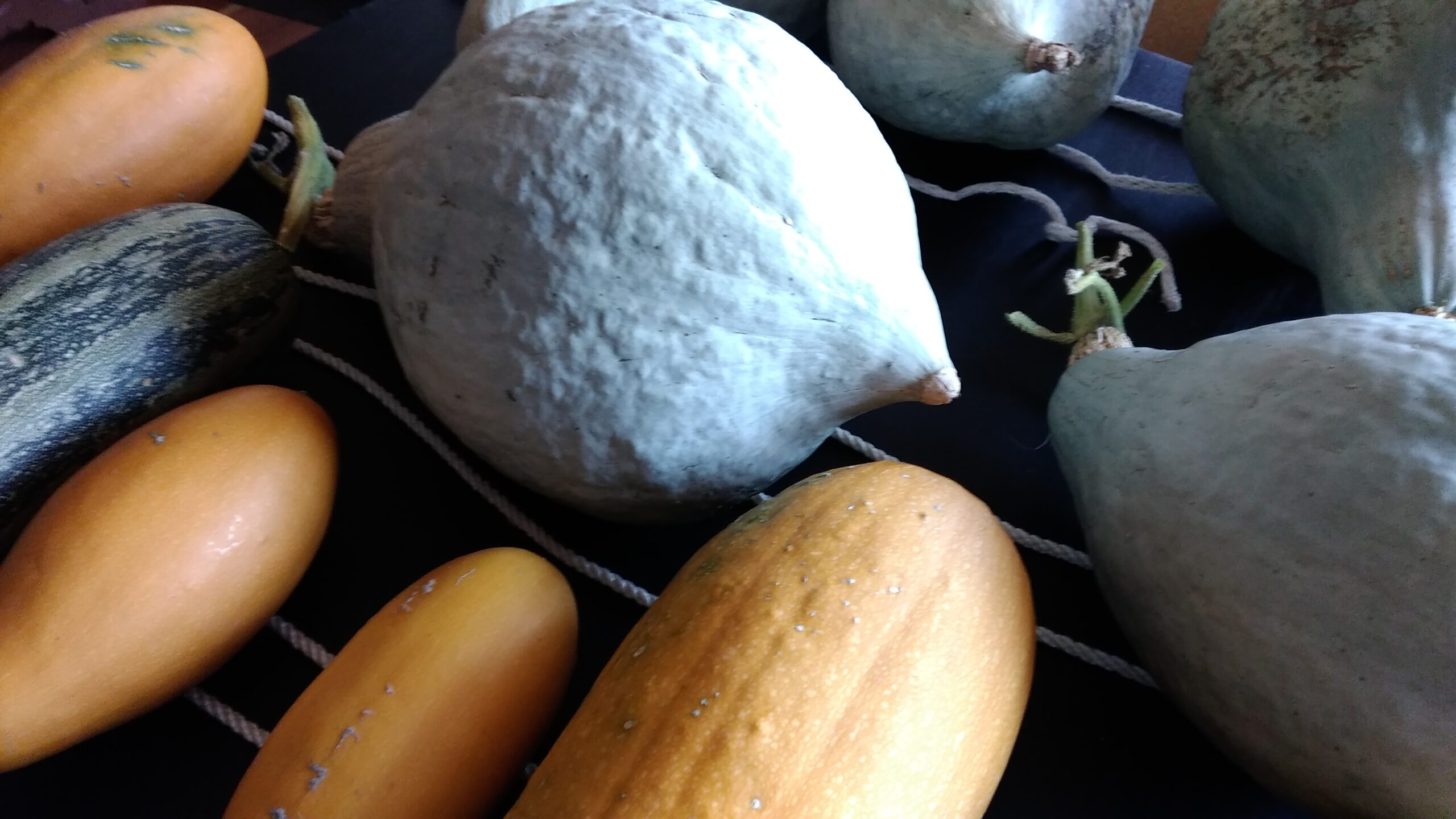
For the past several years, I quit celebrating Thanksgiving on the day-of. My compromise was to host a “harvest gathering” on the day after. I called it Leftover Day and invited all my friends to drop in, open-house style. It was cute. It let me have a time of quiet consideration on the day-of, cook some Indigenous foods, and “sit-out” the real holiday. But I never told any of my friends why. I let myself off the hook as far as doing anything too uncomfortable.
I’m not sure why I’m choosing to be vocal this year. Maybe, with all my recent health challenges, I’ve hit some critical mass of pondering my own mortality. I no longer understand why I’ve been so hesitant to speak out regarding issues that matter to me. Life is too damn short to worry about offending others.
So here it is plainly: I don’t celebrate Thanksgiving because I find the holiday morally troubling. The very existence of this holiday hurts people whom I care about. Why would I celebrate a day that only causes painful remembrance for others?
Whatever You do, Don’t Accuse Me of Denial
During a recent chat with a friend, I brought up the topic of this blog and said, “When white people practice denial regarding Thanksgiving, when we routinely practice denial regarding race relations in general, that practice of denial becomes ubiquitous. It affects all our relationships.”
My friend bristled ever so slightly. “I’m not in denial about what happened. I don’t deny that genocide was perpetrated against Native people.”
I realized that the very word “denial” was so triggering that my friend couldn’t hear the rest of the thought: the idea that practicing denial over and over in one area of your life, might affect all your other relationships too. Denial becomes a habit, an automatic response.
But to understand that, you’ve got to understand the definition of denial, as a psychological protective defense.
I clarified: “I’m not calling you a genocide-denier. This isn’t an accusation. I’m not saying that you claim the atrocities didn’t happen. Denial is at work when we recognize something is overtly wrong, and we do nothing about it. We deny a responsibility—or outright ability—to do anything about it. Like, ‘Daddy is a raging alcoholic, and everyone knows it, but we don’t talk about that.’ That’s denial too. It’s a habitually chosen inaction, despite knowing that something is very wrong, right now.”
“Denial” in these scenarios, is a psychological defense mechanism. In terms of the flight-fight response, this is close cousin to the third option: freeze. Yes, denial can mean outright denying that something even happened. But protective denial simply means:
“Failure to acknowledge an unacceptable truth or emotion or to admit it into full consciousness, used as a defense mechanism.”
It’s not healthy to practice denial. White folk, even well-intentioned starving artists like myself, are exceptionally well-practiced at denial. This ubiquitous practice not only shows up in matters of race and class, it undergirds all our relationships. It’s a default response anytime conversations get dicey.
Here’s a hopeful thought: We don’t need to remain stuck here. Just as denial can have a metastatic reach in one’s life, I think the positive converse is also true. I think when a person speaks honestly, when one practices compassionate truth in one relationship, that honesty can spread to many other relationships.
So… What to DO about Thanksgiving?
Step One: Speak Truth
I like the idea of a harvest gathering. A time of gratitude at the end of autumn. So, in my little corner of the world, yes, let’s get together. And let’s also speak some truth during that gathering.
From the 1500s onward, waves of colonial settlement pushed Indigenous Tribes off their land and attempted total genocide. The cultural genocide is still happening. Given the crisis of Missing and Murdered Indigenous Women and Children, the literal genocide hasn’t ended either. And yet, Indigenous people are still here, and white folk are here too. There’s no way to restore everything that has been lost, harmed, and stolen. But the big-ness of the issue is not an acceptable reason to do nothing.
Denial is the fruit of overwhelm. It’s a kind of moral paralysis. Appropriately-sized action has always been the antidote.
Step Two: Find Your Action
One thing I’ve learned while living in a body with a complex genetic disorder: Healing does not happen by doing nothing. Even in a healthy body, if you undergo a surgery or survive a major injury, you only improve your situation by doing serious healing work afterward. You’ve gotta do your physical therapy (PT). Doing nothing = continued pain and suffering.
That’s the way healing works, whether in a hurting body or in a broken relationship or between nations. If you want healing, you’ve got to work for it.
What if we transformed Thanksgiving into an opportunity to do some moral and spiritual PT?
It’s simply not true that we have no choice, or that this issue is too big to address. As the Jewish saying goes, “The task of healing the world (Tikkun Olam) will never be finished in your lifetime, so you better get started right now!” There are a thousand small choices a white person might make to become a more healing presence in relationship with their local Indigenous communities—in lieu of the inaction that perpetuates a damaging status quo.
This is not complicated, does not involve heroic effort, and doesn’t require you to physically “go to the Reservation” to find yourself some new Native friends and offer them unasked-for help. Honestly, I don’t think most white folk, even the most open-minded liberals, are immediately ready to forge genuine one-to-one friendship with Indigenous people. Most Indigenous people I’ve spoken with really don’t want to be “your Native friend”—or your confession booth or your spiritual director.
It’s appropriate to start in the background. Start with a simple, educational small-step. One could:
- Support local Indigenous artists and tradespeople. Buy their products as holiday and birthday gifts. (There’s actually an Indigenous Marketplace happening at the Emerson Center in Bozeman this weekend!)
- Support non-profits and scholarship funds that empower Indigenous young people in your region.
- Learn about Indigenous culture and language preservation efforts in your region.
Find the groups that resonate with your own soul, and support them monthly or quarterly. Make a regular gift that you can afford, read their updates, and learn about what they do. Through those connections, if you learn about a specific political action or volunteer opportunity, show up. But leave behind any need for heroic recognition or gratitude. Be useful. Listen. Just be.
Here are the organizations I follow. Take a look. If you live in another state, research other groups near you and support them.
- Indigenous Marketplace at Emerson Center in Bozeman – Fri-Sat, Nov. 28-29, 2025; 10:00am-6:00pm, both days.
- Mountain Time Arts – https://mountaintimearts.org/about-us
- HOPA Mountain – https://www.hopamountain.org/
- “The Place Where We Do Our Best” – Snqweylmistn – https://www.snqweylmistn.org/
Happy Autumn. Happy Harvest Time. This holiday weekend, I hope you take some time to research, explore, question, and discover what you might do to foster a little more healing in your world.